Field acquisition
IP & Resistivity
Induced polarisation and electrical resistivity tomography to detect disseminated sulphides, clay alteration and groundwater.
Induced polarisation (IP) is the main ground method for porphyry copper-gold and other sulphide targets. Fine-grained, disseminated sulphides that magnetics cannot see store electrical charge for a moment after current is switched off. IP measures that charge (chargeability). The same survey measures resistivity, which maps silicification, clay alteration, faults and water.
How it works
An IRIS VIP transmitter, powered by a generator, pushes a strong square-wave current into the ground through steel electrodes. IRIS Elrec Pro receivers measure the voltage on a line of receiving electrodes, both while the current flows (resistivity) and as it decays after switch-off (chargeability). Moving the electrodes along the line builds up readings at many depths.
Arrays
- Gradient array: fast reconnaissance over large areas, good for mapping where the chargeable zones are.
- Dipole-dipole and pole-dipole: detailed lines that show depth and dip, used to plan drill holes.
- 3D layouts: offset lines or distributed receivers when the target geometry is complex.
What it finds
- Disseminated sulphides in porphyry and epithermal systems.
- Silicified and quartz-veined zones as resistivity highs, important for gold.
- Clay alteration and faults as resistivity lows.
- Groundwater and salty water, which conduct well.
Quality control
Mongolia's frozen and dry ground makes good electrode contact hard. Crews dig, water and salt electrode pits, check contact resistance before each reading and repeat readings to check stacking errors and decay curves. Readings that do not meet the standard are taken again before the crew moves on.
Limits
Graphite, clays and some barren pyrite can also be chargeable, so IP targets need geological judgement and, ideally, drilling. Very resistive or frozen surface layers limit current and increase noise.
Sample output
What you get back
An example of the kind of figure that goes into the report. The data here is synthetic, made to show the method, not taken from a client job.
A dipping chargeability body under 40 m of barren cover, typical of disseminated sulphides. White ticks mark electrode stations. Generated for illustration; not client data.
In the field
How it looks on the ground
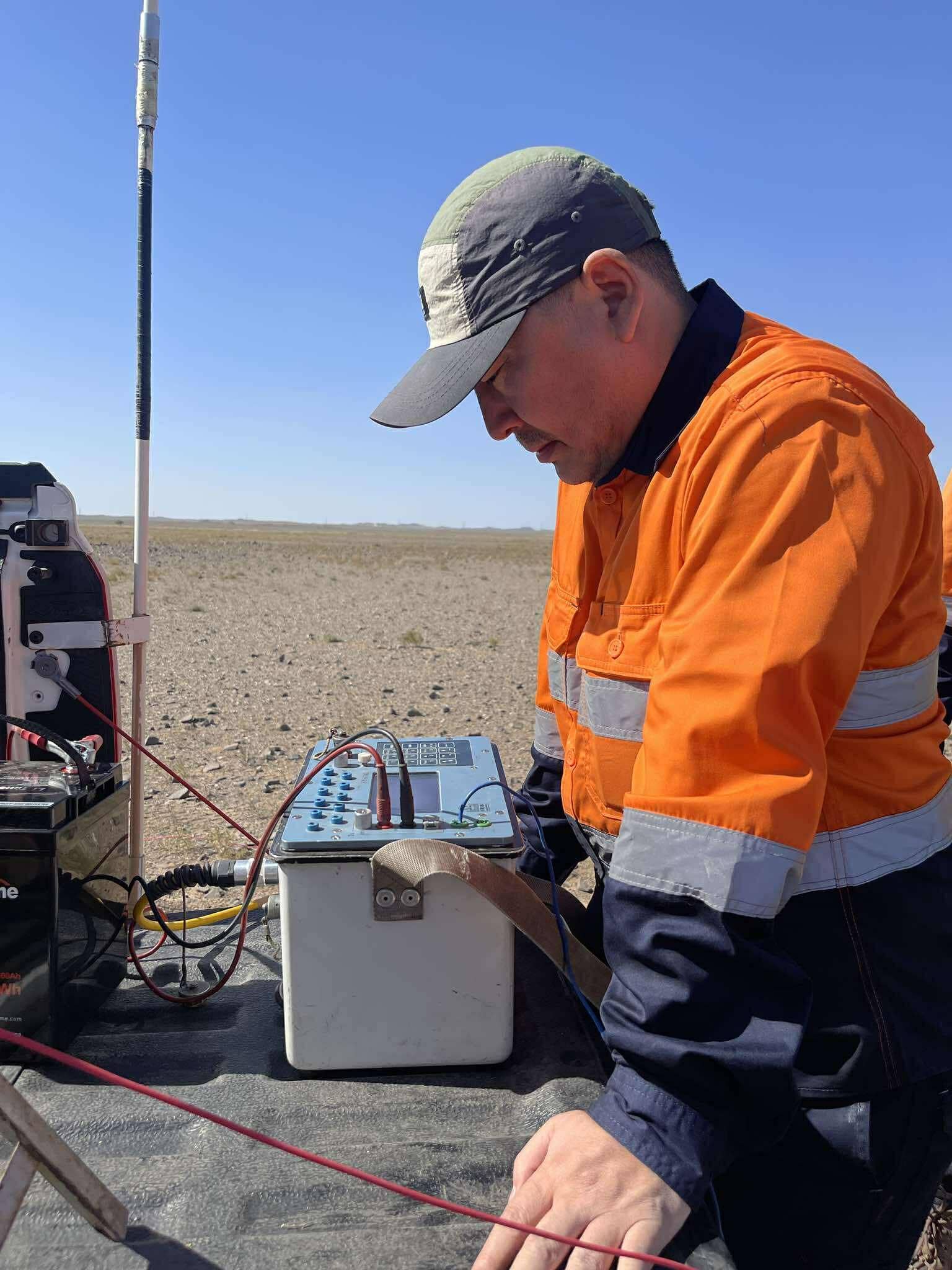
Reading the receiver
Each IP reading is checked on the spot. Bad contact or noise gets fixed before the crew moves on.
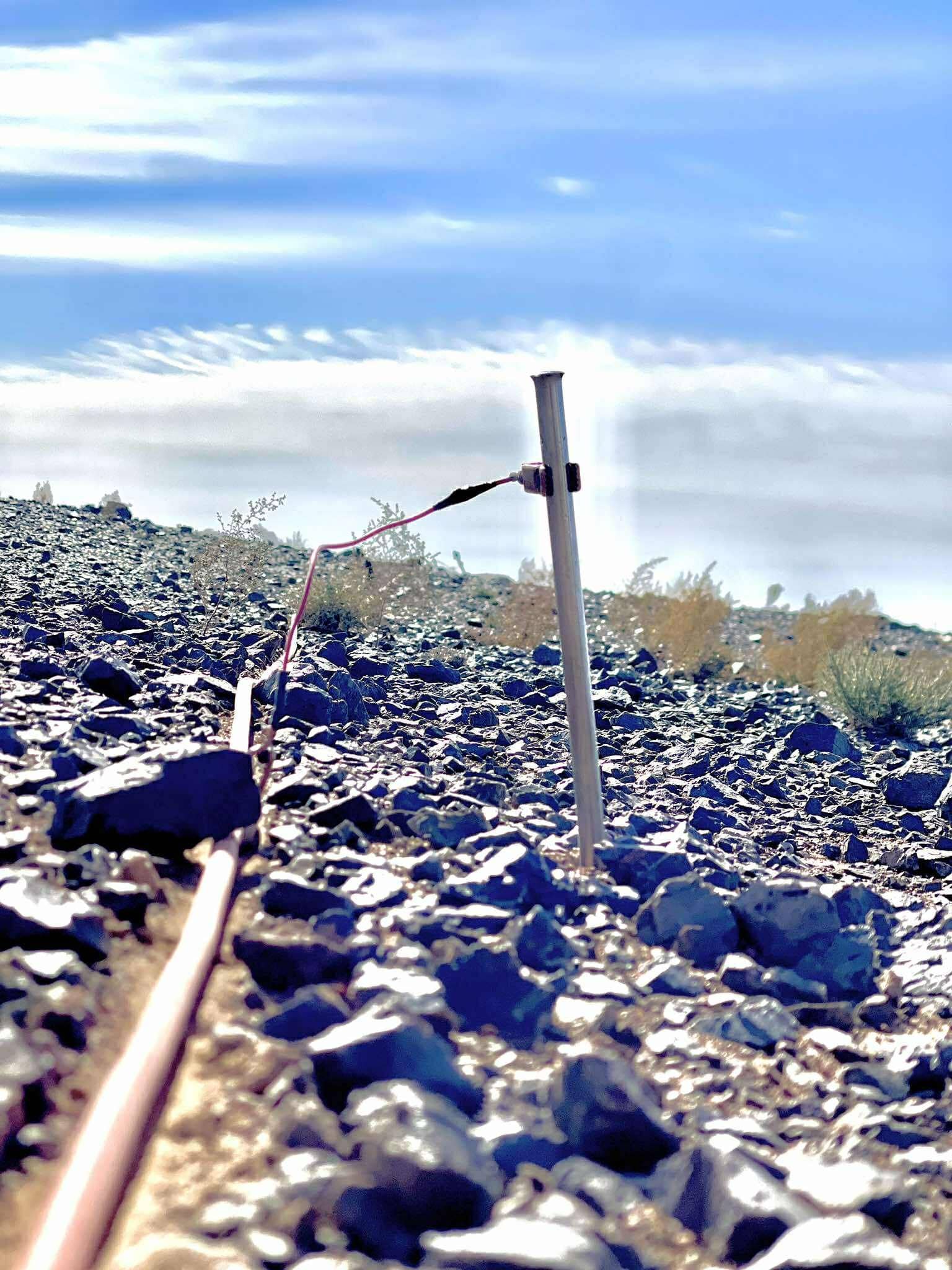
Electrode
On frozen or stony ground, getting current in is half the job. Every contact is checked.
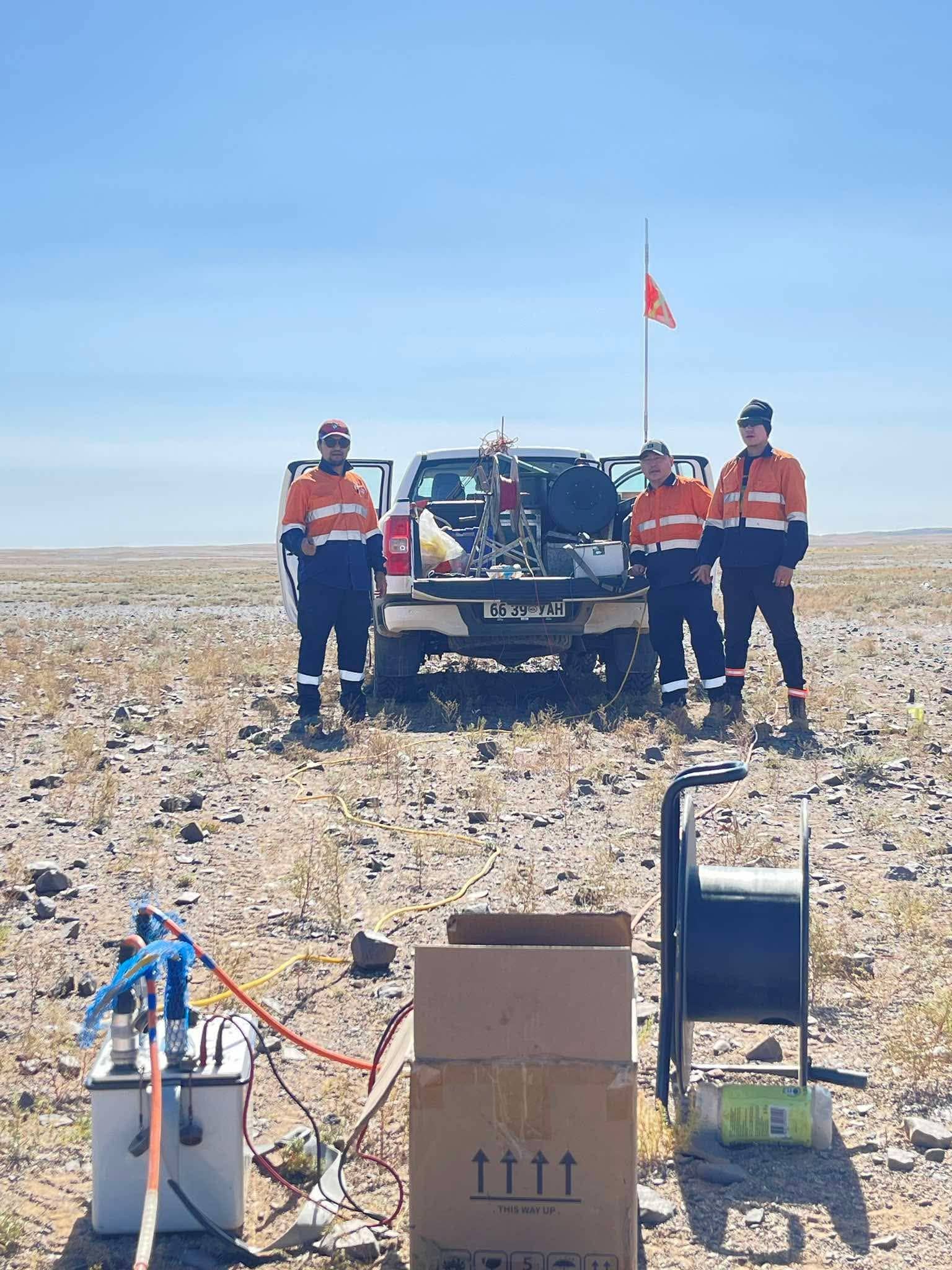
IP set-up
Transmitter, generator, kilometres of wire. An IP crew is a small moving power station.
Where we’ve used it
Other methods · Field acquisition
Send us a licence boundary.
A shapefile or a sketch on a map is enough. Tell us what you're looking for and we'll come back with a method, line spacing and price, usually within two working days.
Start a quote→